
Professional Working Methodology
A systematic approach to engineering collaboration with clear processes and flexible engagement options. Our methodology ensures quality, transparency, and alignment with client requirements.
Structured Process
Systematic engineering methodology with clear milestones
Direct Communication
Founder-level access with regular project updates
Adaptable Models
Multiple engagement options to suit project requirements
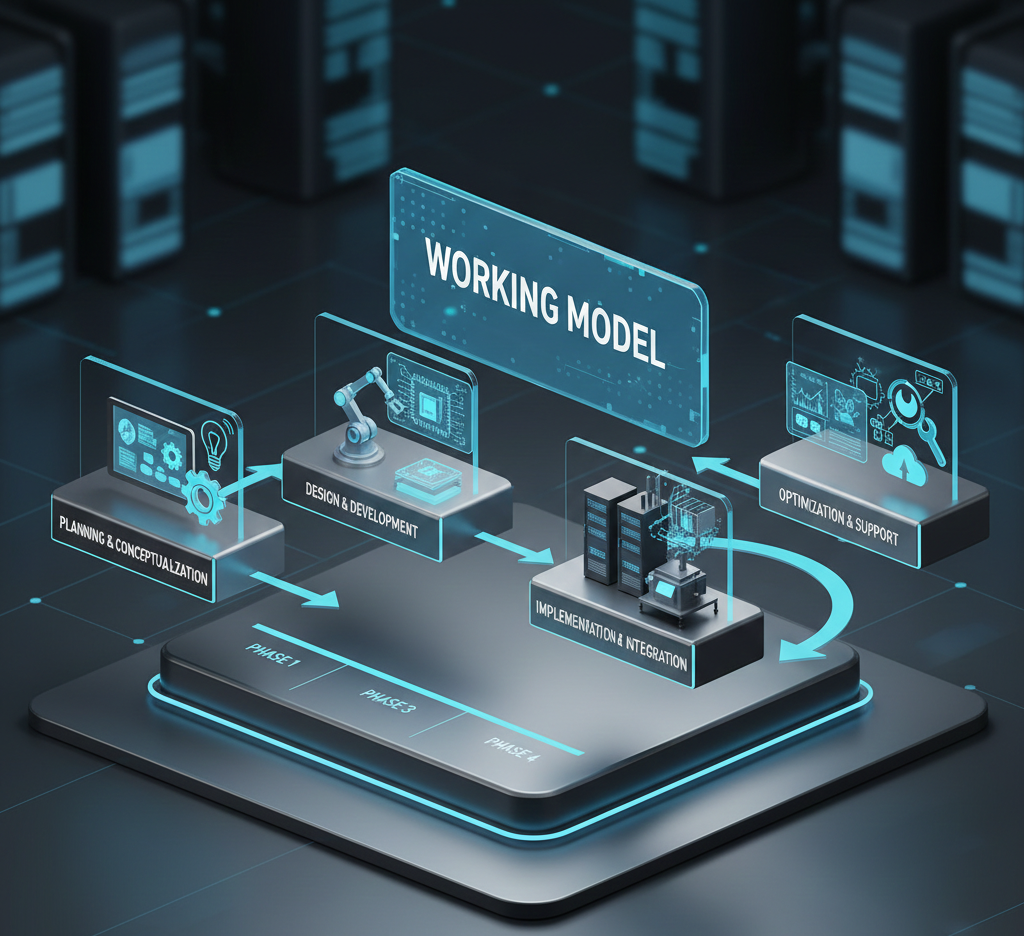
Systematic Engineering Process
A proven 7-phase methodology ensuring quality, compliance, and alignment with technical requirements.
Requirement Analysis
Comprehensive technical discussion to understand project objectives, constraints, and success criteria.
Concept Development
Generation and evaluation of multiple concept alternatives with feasibility assessment.
Client Review & Approval
Formal review and approval of selected concept before proceeding to detailed design phase.
Detailed Design Engineering
Complete 3D modeling, component design, and system integration planning.
Engineering Analysis & Validation
FEA, motion analysis, and other validation methods to ensure design integrity.
Technical Documentation
Complete technical documentation package for manufacturing and assembly.
Project Review & Final Delivery
Comprehensive review sessions and final delivery of all project deliverables with complete technical handover.
Quality Assurance Principle
Each project phase requires formal client approval before proceeding to the next phase, ensuring continuous alignment and minimizing rework.
Professional Engagement Models
Select the collaboration framework that aligns with your project requirements, timeline, and resource allocation.
Hourly Engineering Support
Flexible engineering assistance for variable workloads, specialized expertise requirements, or ongoing technical support.
Recommended Applications:
- Peak engineering workload periods
- Specialized technical expertise requirements
- Ongoing technical consultation
- Projects with evolving scope requirements
Billed monthly against logged engineering hours, with a 20-hour monthly floor to keep priority allocation predictable on both sides.
Project-Based Engineering
Fixed-scope engineering projects with clearly defined deliverables, timeline, and budgetary parameters.
Recommended Applications:
- Well-defined engineering projects
- Projects requiring budget predictability
- Clear deliverable specifications
- Specific timeline constraints
Fixed-price structure based on detailed project specification. Milestone-based payment schedule.
Strategic Engineering Partnership
Retainer-based collaboration for ongoing engineering requirements, multiple related projects, or extended development initiatives.
Recommended Applications:
- Multiple interconnected engineering projects
- Continuous R&D and development activities
- Extended product development cycles
- Strategic technical collaboration
Monthly retainer with dedicated engineering resources. Volume-based pricing advantages.
Engagement Model Comparison
| Characteristic | Hourly Support | Project-Based | Strategic Partnership |
|---|---|---|---|
| Financial Structure | Hourly engineering rate | Fixed project price | Monthly retainer fee |
| Budget Predictability | Variable based on hours | Fixed and predictable | Fixed monthly commitment |
| Adaptability to Changes | High flexibility | Medium flexibility | High flexibility |
| Scope Modification Process | Easily accommodated | Formal change order required | Easily accommodated |
| Minimum Engagement Period | 20 hours per month | Project-specific minimum | 3-month initial term |
| Optimal Application | Variable engineering workloads | Clearly defined projects | Strategic engineering initiatives |
Communication & Collaboration Protocol
Communication Standards
- Direct Technical Leadership Access: Communication with engineering leadership
- Scheduled Progress Reviews: Regular project status updates
- Comprehensive Documentation: All technical decisions formally documented
- Dual-Location Coordination: Germany-India engineering team collaboration
Collaboration Infrastructure
We adapt to client-preferred communication protocols and collaboration tools.
A Few Things Every Client Can Count On
The full agreement for your engagement is put in writing before work starts. These three points hold regardless of which model above you choose.
NDA by Default
Every engagement starts under mutual non-disclosure - no separate request needed.
Client Owns the IP
Design outputs and documentation transfer to the client on final payment.
Response Commitment
Same terms as every client-facing page on this site: initial response within 24–48 hours.
Representative Project Timeline
Example schedule for a medium-complexity engineering development project.
Week 1-2: Discovery & Planning Phase
Comprehensive requirements analysis, scope definition, and project planning.
Week 3-4: Concept Development Phase
Concept generation, feasibility analysis, and technical review sessions.
Week 5-8: Detailed Design Phase
3D modeling, component design, and technical specification development.
Week 9-10: Engineering Validation Phase
Engineering analysis, simulation, and design optimization activities.
Week 11-12: Documentation Phase
2D drawing creation, BOM development, and technical documentation preparation.
Week 13: Final Review & Delivery
Comprehensive project review, final adjustments, and complete project delivery.
Project timelines are customized based on specific complexity, scope, and client review requirements.
Ready to Start Your Project?
Talk to our engineering team about your machine or automation system - no obligation, direct technical response.
Get in Touch